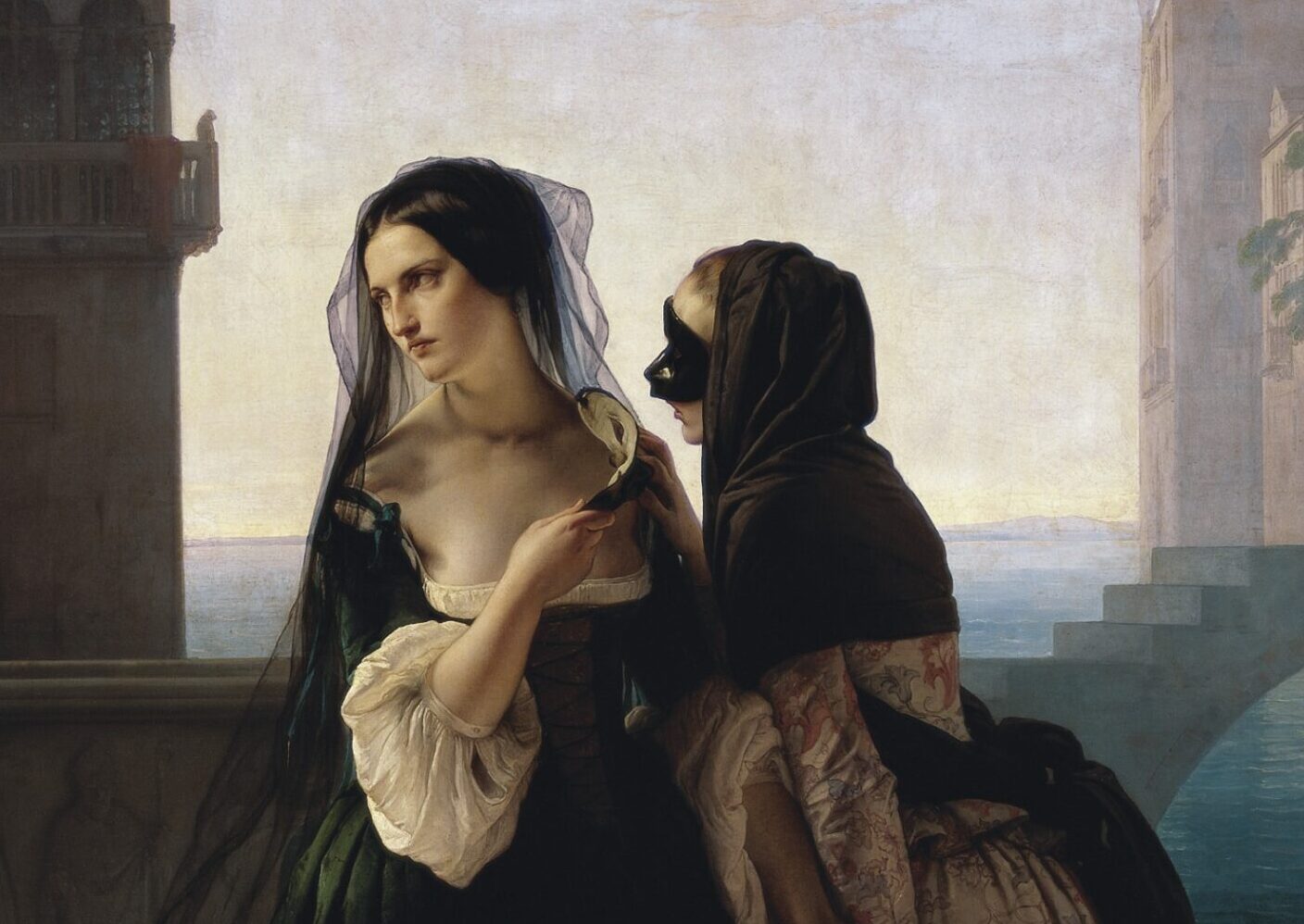
Vengeance is Sworn (Consiglio alla vendetta) by Francesco Hayez, 1851
In the age of revolution, art was rarely just art. It was persuasion, provocation, and—at times—quiet defiance. Francesco Hayez’s Revenge Triptych belongs squarely within this charged cultural moment, when painters across Europe turned private emotion into public language, encoding political unrest within scenes of intimacy, restraint, and moral tension.
Created in the shadow of revolutions and failed uprisings, Hayez’s Triptych reflects a Europe grappling with justice, legitimacy, and the ethics of resistance. In the age of revolution, revenge became ideological.
Revenge and Justice in the Age of Revolution: A New Visual Language
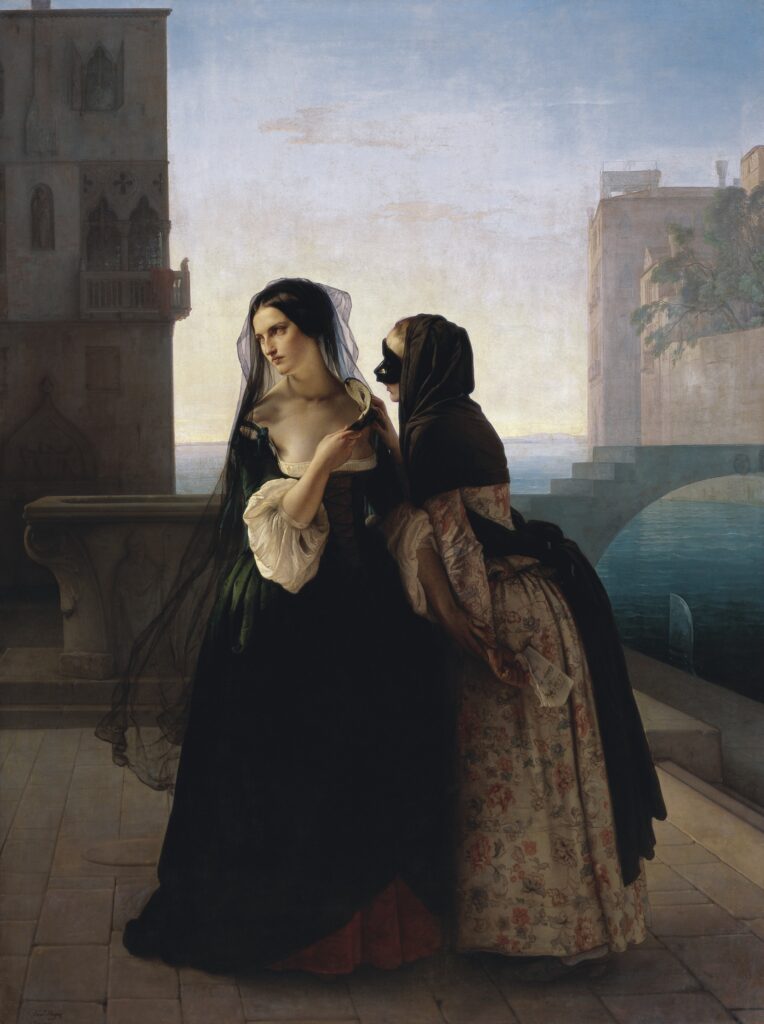
The age of revolution demanded new aesthetics. Grand allegories and heroic battle scenes began to give way to interiors, gestures, and psychological drama. Hayez’s Revenge unfolds not on a battlefield but within a private space, where a woman’s silent resolve becomes the moral center of the narrative. This shift mirrors a broader European trend, seen in Romantic painting from Delacroix to Goya, where emotion carried political weight.
Justice, in this context, is ambiguous. The Triptych never shows violence; instead, it lingers in the moment before action. This restraint is emblematic of the age of revolution, when artists often suggested dissent rather than declared it outright—particularly in regions under surveillance, such as Austrian-controlled Milan.
Romanticism and the Ethics of Vengeance
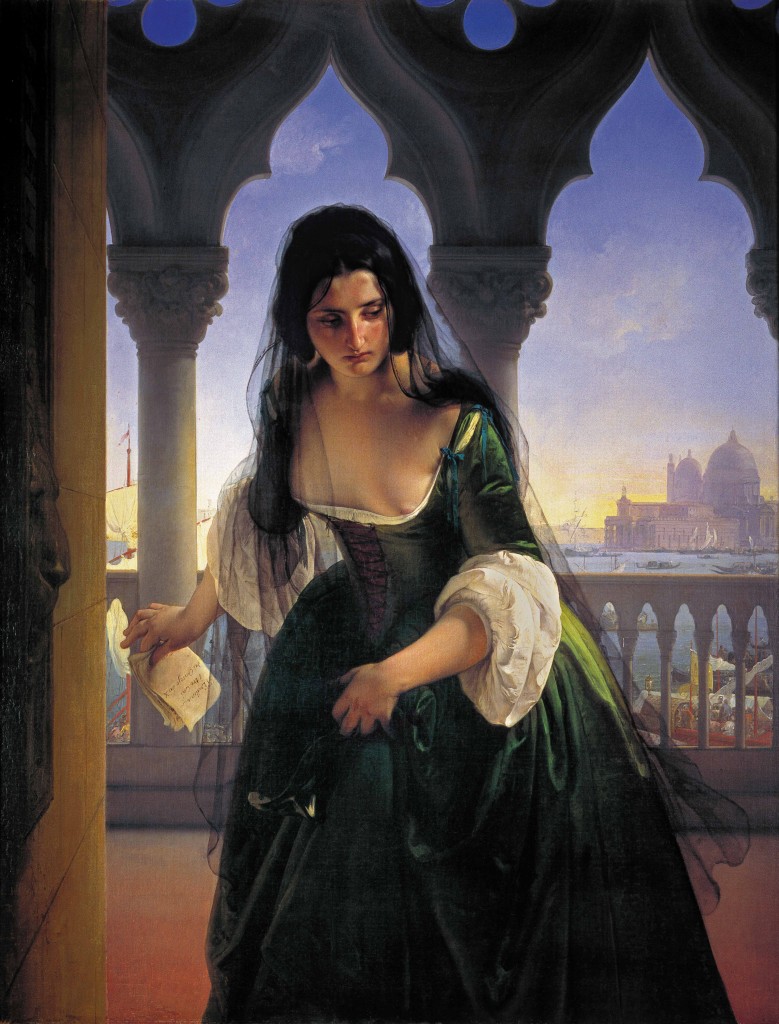
Across Europe, the age of revolution reshaped Romanticism into a vehicle for ethical inquiry. Hayez’s Revenge does not glorify vengeance as triumph. Instead, it frames revenge as a moral burden, heavy with consequence. This echoes contemporary debates among revolutionaries themselves: when does justice become cruelty, and when does restraint become complicity?
Unlike classical depictions of revenge as divine or heroic, Hayez’s vision is human, hesitant, and unresolved. In this sense, the Triptych aligns with a generation of artists who portrayed revolution not as spectacle, but as psychological condition.
A European Conversation in Paint
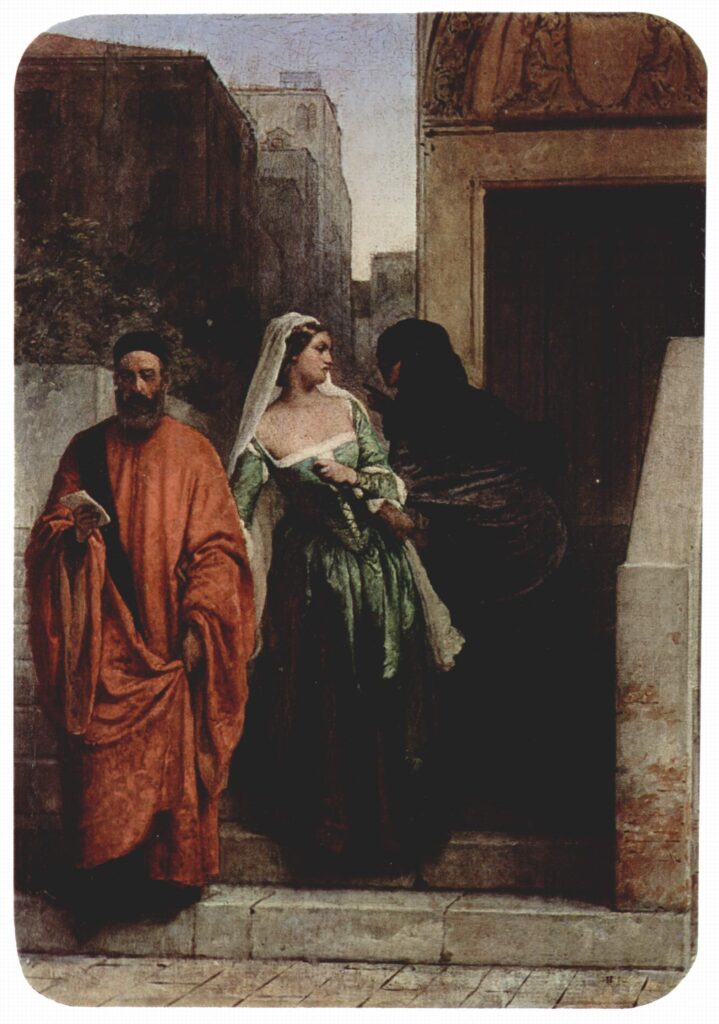
Situating Revenge within the broader aesthetics of the age of revolution reveals its transnational resonance. From Paris to Madrid to Milan, artists explored the same questions: How does one resist without becoming monstrous? Can justice be achieved without blood? Hayez’s answer is deliberately incomplete—mirroring the political uncertainty of his time.
This ambiguity made the work legible to contemporaries while remaining safely deniable to authorities. In the age of revolution, subtlety was a survival.
In transforming revenge into contemplation and justice into question, Hayez offered his audience not answers, but recognition. And in doing so, he secured his place within the enduring visual legacy of the age of revolution—an era when art learned to speak softly, and therefore, powerfully.
