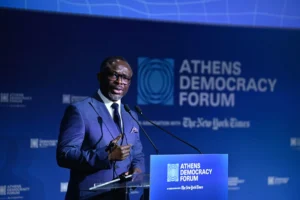
“Democracy Today Still Exists, but It Has Become Weaker”: A Conversation on Rebuilding Democracy with Dr. Udo Jacob
Reflecting on the turbulent political discourse of the twentieth century, Dr. Jacob highlights both its triumphs and warning signs. His central takeaway is clear: language does not merely describe political reality. It constructs it.
Read More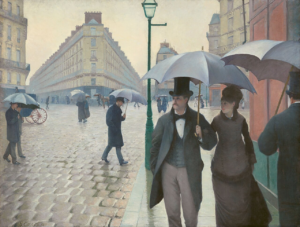
Umbrellas: The Aesthetics of 19th-Century Urban Life
Appearing in Ancient Egypt around the 25th century BC, umbrellas evolved and took on different purposes.
Read More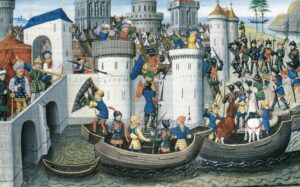
The Family Crest Was Medieval Europe’s First Friend-or-Foe Tracker
The family crest, painted large and in high-contrast color on a shield, solved a targeting problem before it became a lineage symbol.
Read More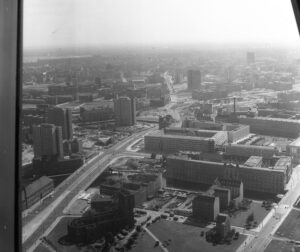
Concrete Ambitions: How the Eastern Bloc Built Its Cities in the 1970s
By the early 1970s, the Eastern Bloc had a housing problem it could not talk its way out of. Postwar migration to cities across Poland, Czechoslovakia, Hungary, and the Soviet Union itself had outpaced construction for two decades, and planners in Moscow, Warsaw, and East Berlin faced the same arithmetic: too many workers, too few apartments, and a political system that had promised both full employment and a home for every family. The response was one of the largest urban-construction efforts in modern European history, and its architectural, social, and administrative scars are still visible today.
Read More
The Walls Have Ears: How Cold War Intelligence Turned Everyday Objects into Listening Devices
Cold War intelligence services on both sides of the Iron Curtain mastered a discipline that turned the ordinary furniture of daily life into a vast, silent network of listening devices, and the story of how they did it remains one of the most interesting chapters in the history of espionage tradecraft.
Read More