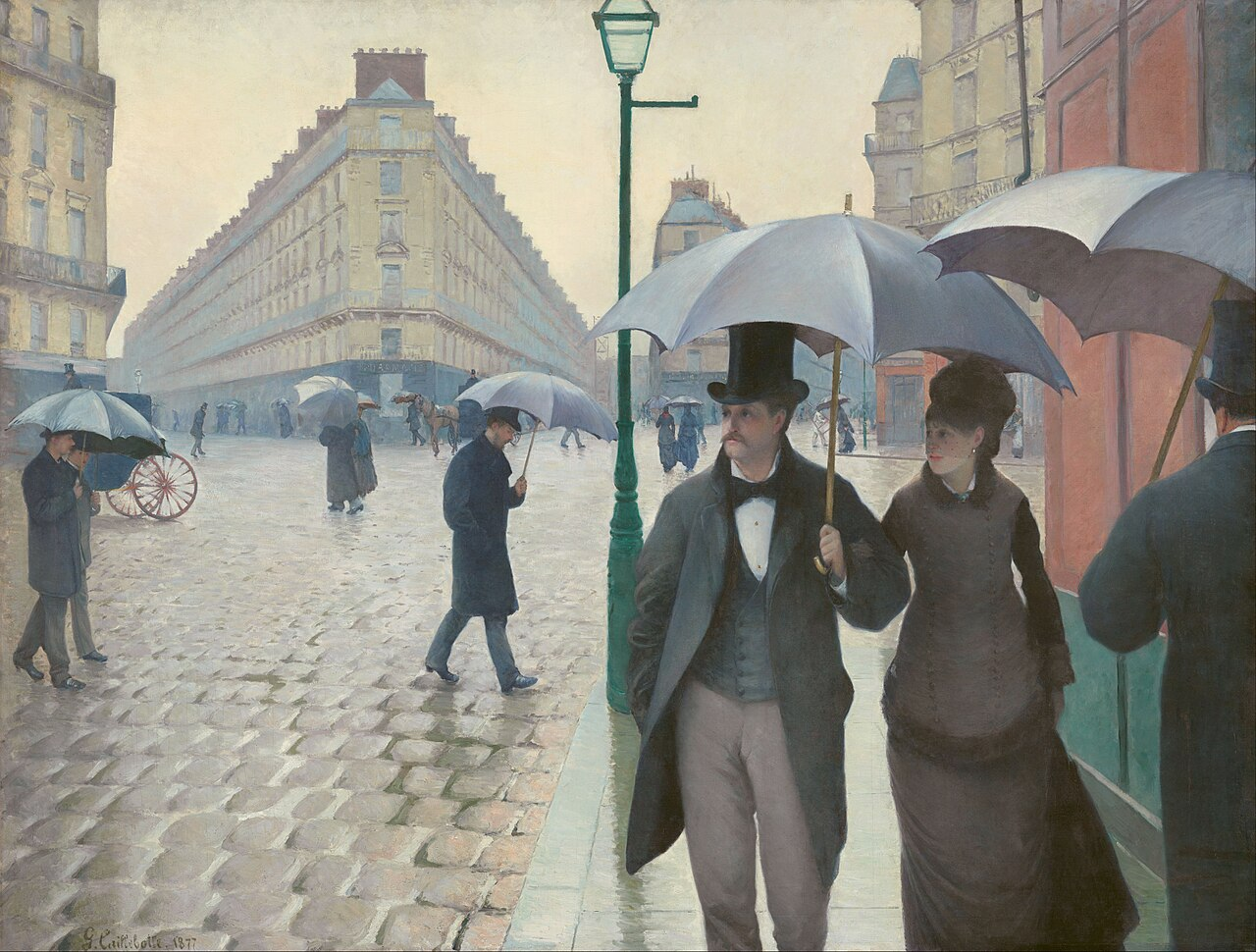
Paris Street; Rainy Day, by Gustave Caillebotte, 1877
As summer draws to a close and September arrives, the familiar patter of raindrops against grey afternoon windows carries a crisp, refreshing charm. While many find a quiet romance in dark skies washing over old town cobblestones, fully enjoying that pre-autumn air usually requires a trusty umbrella, indispensable when the weather is changing.
From Status and Fashion to Protection
Appearing in Ancient Egypt around the 25th century BC, umbrellas evolved and took on different purposes. In Ancient Egypt, Akkad, and Persia, for example, umbrellas served as status symbols, often tied to regal processions. In Ancient Greece, fashionable ladies used umbrellas as a style statement. In Rome, maidservants also used umbrellas to protect high-status women from the sun. There are rare mentions of umbrellas used for protection from rain. During the Middle Ages and the 16th and 17th centuries, umbrella popularity declined. Umbrellas were mostly reserved for clergy and religious processions. Records also note Italian riders using them as protection from rain.

A Fashion Statement that Challenged the Social Norms
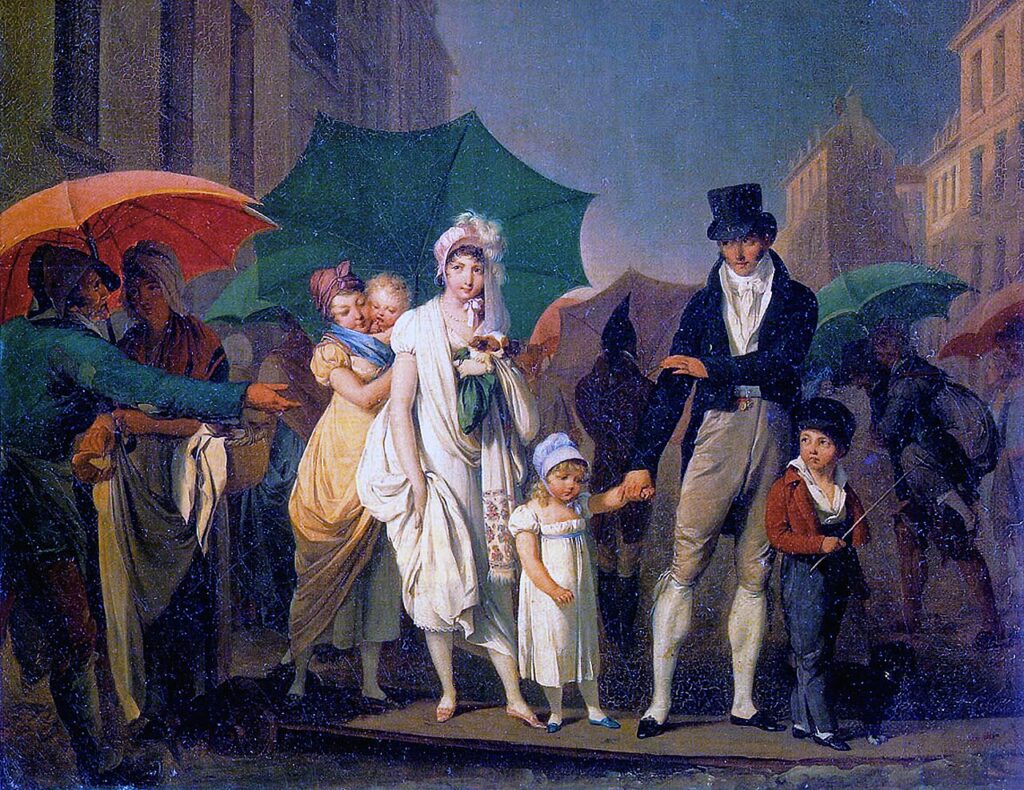
In the 18th century, things changed. Umbrellas were mostly used by women to protect themselves from rain. There was also a common perception that umbrella users were “vulgar” and didn’t have their own carriage to escape from rain. Apart from women, the most frequent users of umbrellas were the lower classes, who saw them as protection from sudden downpours or long, slow autumn rains. The first lightweight folding umbrella in Europe was introduced by French merchant Jean Marius, who had a shop in Paris. Princess Palatine purchased a model in 1712 and introduced it to her aristocratic friends. Very soon, umbrellas became a hit fashion statement in Paris. This paved the way for luxury umbrellas where the handle was especially important. The makers of umbrellas paid a lot of attention to crafting special handles depicting animals and having special shapes made from precious materials and carefully ornamented. In England, Jonas Hanway, a merchant and the founder of Magdalen Hospital, was the first person who braved public ridicule by carrying an umbrella in public. By the end of the 18th century, umbrellas were widely accepted by English gentlemen.
From Luxury to Mass Production
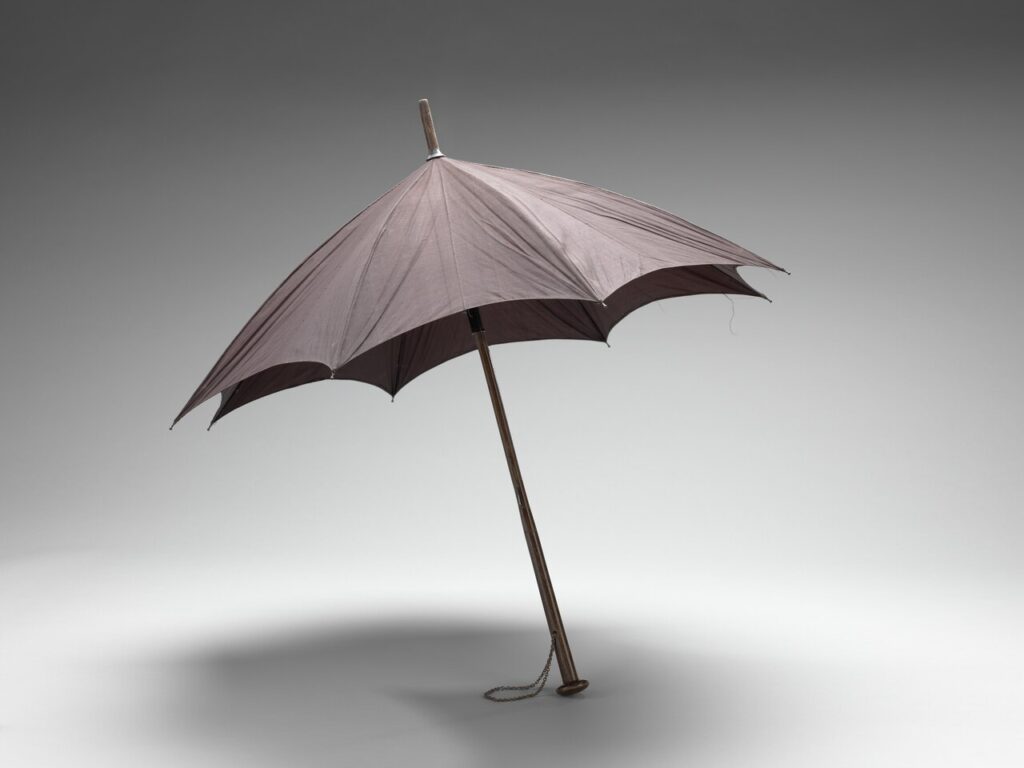
By the 19th century, umbrellas had entered general use across all social classes. They came in diverse shapes and forms, ranging from simple models bought by the masses to intricate designs that were true works of art. Their handles were made from materials like sterling silver, leather, rare woods, and other fine materials. It’s interesting to mention that luxury umbrellas came at a cost, so not everyone could afford them. Those umbrellas that were made for the masses spread so quickly that manufacturers needed new marketing tactics to grab attention. So, it was not rare in the middle of the 19th century to find umbrellas with hidden compartments, perfume storage, or custom details tailored to individual buyers.
Old-World Elegance in a Changing Society
19th-century umbrellas had a dual purpose, protective and aesthetic. Apart from protection from rain, they were a fashion statement and status symbol. Carrying an umbrella on a quiet, rainy autumn day was part of urban life. It signaled belonging to a distinct culture that had its values and appreciated classic, old-world aesthetics. In the big capitals of Europe, grey autumn days highlighted the cultural status of umbrellas. The culture of umbrellas reflected the 19th-century European lifestyle. Apart from being a status symbol, the spread of umbrellas also represented respectability within the middle class and urban modernity.
This modernity was seen in technological progress. Although future changes were starting to be seen, appreciation for classic aesthetics still outweighed pure utility. Even in small, everyday objects like umbrellas.
