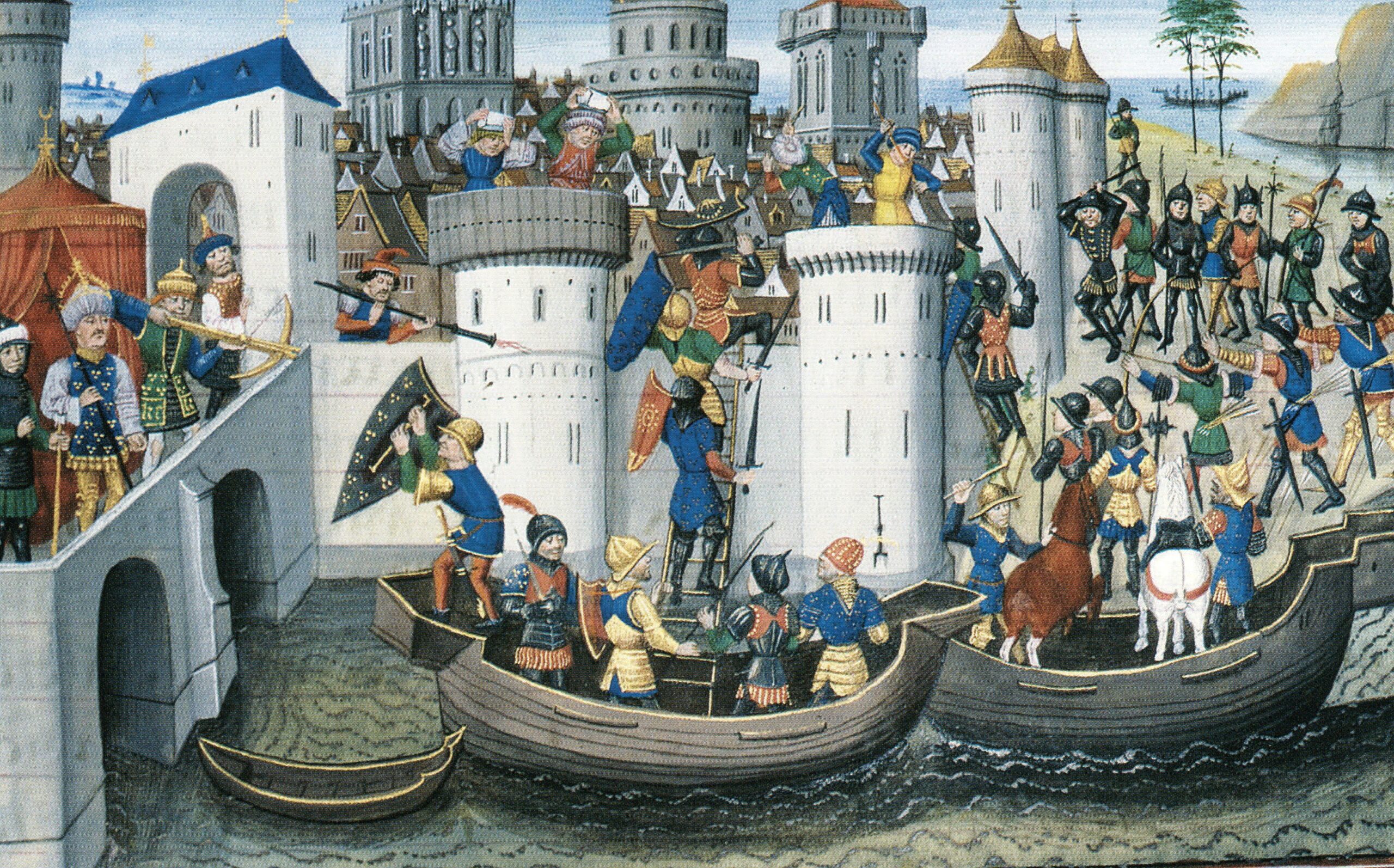
Insignia in the conquest of Constantinople by Crusaders in 1204
Long before radios, transponders, or coded radio chatter told commanders who was friend and who was foe, a knight’s family crest did that job in under a second, at fifty yards, through a rain of arrows. By the twelfth century, European battlefields had grown too large, too armored, and too chaotic for men to recognize each other by face. The solution that emerged, a standardized visual code painted on shields, stitched onto surcoats, and mounted on helms, became one of the most durable identification systems in military history. It is still legible today, on regimental badges, national flags, and corporate logos descended, however distantly, from the same design logic.
Why the Family Crest Became a Battlefield Necessity
The trigger was armor. As great helms and mail coifs covered faces almost entirely, commanders lost the ability to tell one mailed rider from another across a churned, dust-choked field. The family crest, painted large and in high-contrast color on a shield, solved a targeting problem before it became a lineage symbol. It let a lord’s retainers find him in a melee, let allies avoid killing allies, and let a fleeing enemy be identified and pursued by name rather than by guesswork.
The Grammar Behind Every Family Crest
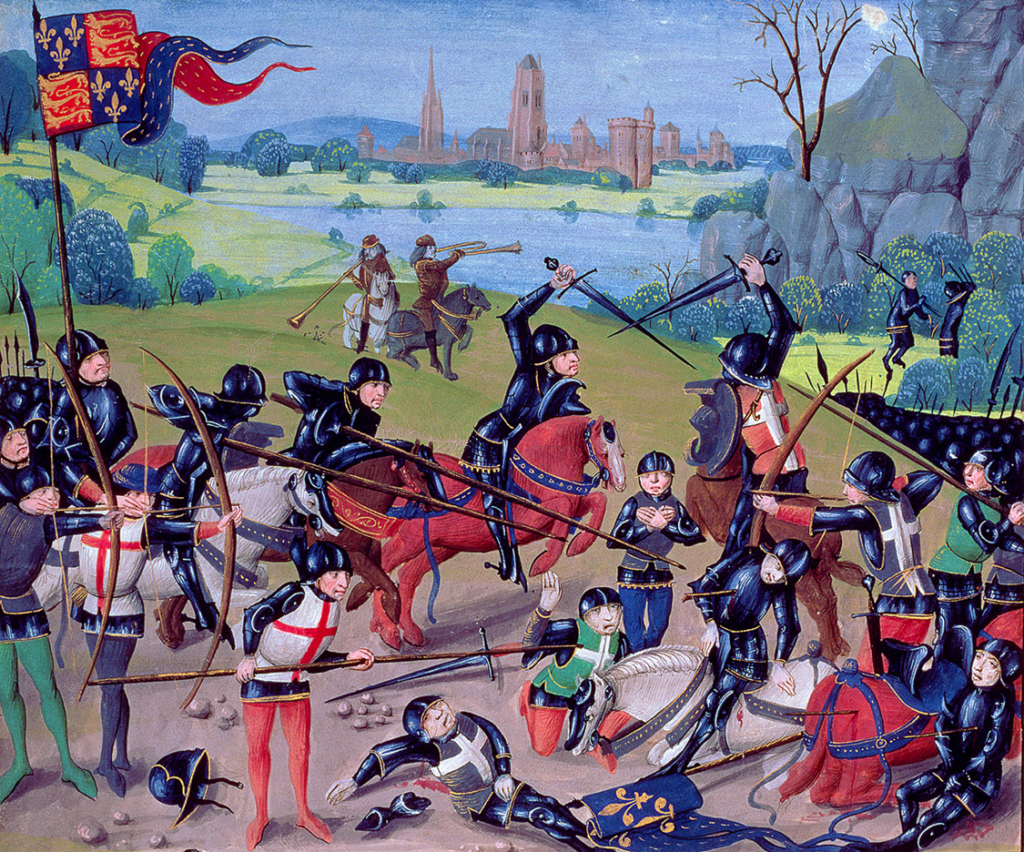
What made the system scale across thousands of noble houses was its formal grammar. Blazonry, the technical language of heraldry, reduced a family crest to a small vocabulary of tinctures (colors), ordinaries (geometric bands), and charges (animals, objects, symbols), combined under strict rules of contrast: metal could not sit on metal, color could not sit on color. That single rule of tincture is easy to underrate, but it is the reason a family crest stayed readable at distance and in bad light, the same principle modern signage designers still call “figure-ground contrast.”
This grammar also made forgery and confusion expensive to sustain. A herald could inspect a shield and, within the rules, determine whether a device was legitimately borne or improperly assumed. Differencing, the practice of altering a family crest slightly for younger sons or cadet branches, extended the system to track not just which house a knight belonged to, but his specific position within it. ž
The Family Crest as an Instrument of Political Signaling
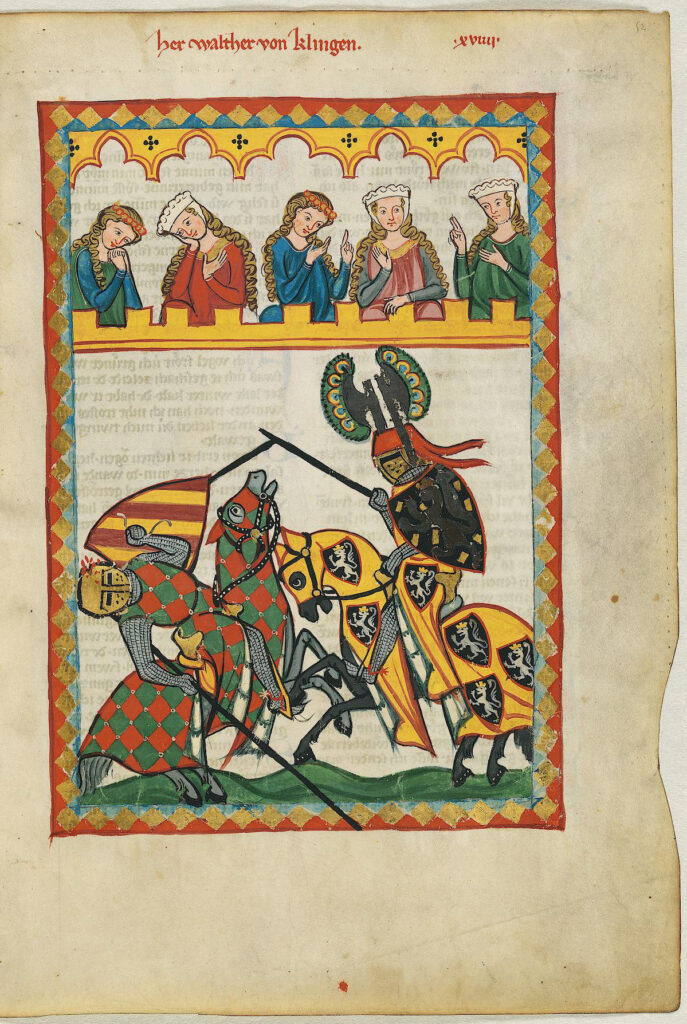
An identification system used on a battlefield inevitably becomes a diplomatic instrument off it. A family crest displayed on a seal authenticated a treaty; on a tomb, it asserted lineage claims that outlived the individual; on a banner at a tournament or a royal entry, it announced alliance or rivalry to an audience of rulers who read the code as fluently as text. Marriages between houses were frequently commemorated by quartering, dividing a shield to display two or more family devices together, turning the crest into a visual record of dynastic consolidation that a chancery clerk’s paperwork could not match for speed of comprehension.
A family crest functioned as an early, standardized signaling protocol between sovereign actors, readable across language barriers in an era when literacy was scarce but visual literacy in blazonry was cultivated deliberately among elites.
When the Family Crest Outlived the Battlefield
Firearms and massed infantry tactics eventually made shields obsolete, and with them the original tactical purpose of the family crest. But the identification logic never disappeared; it migrated. Regimental colors, unit insignia, national flags, and even modern corporate branding descend from the same core requirement heraldry first solved: a compact, high-contrast, rule-governed symbol that lets an observer determine allegiance instantly, without a conversation. The medieval family crest was, in that sense, less a decorative artifact than a functioning protocol, arguably Europe’s first standardized system for answering, at a glance, the oldest battlefield question there is: who are you, and whose side are you on?

