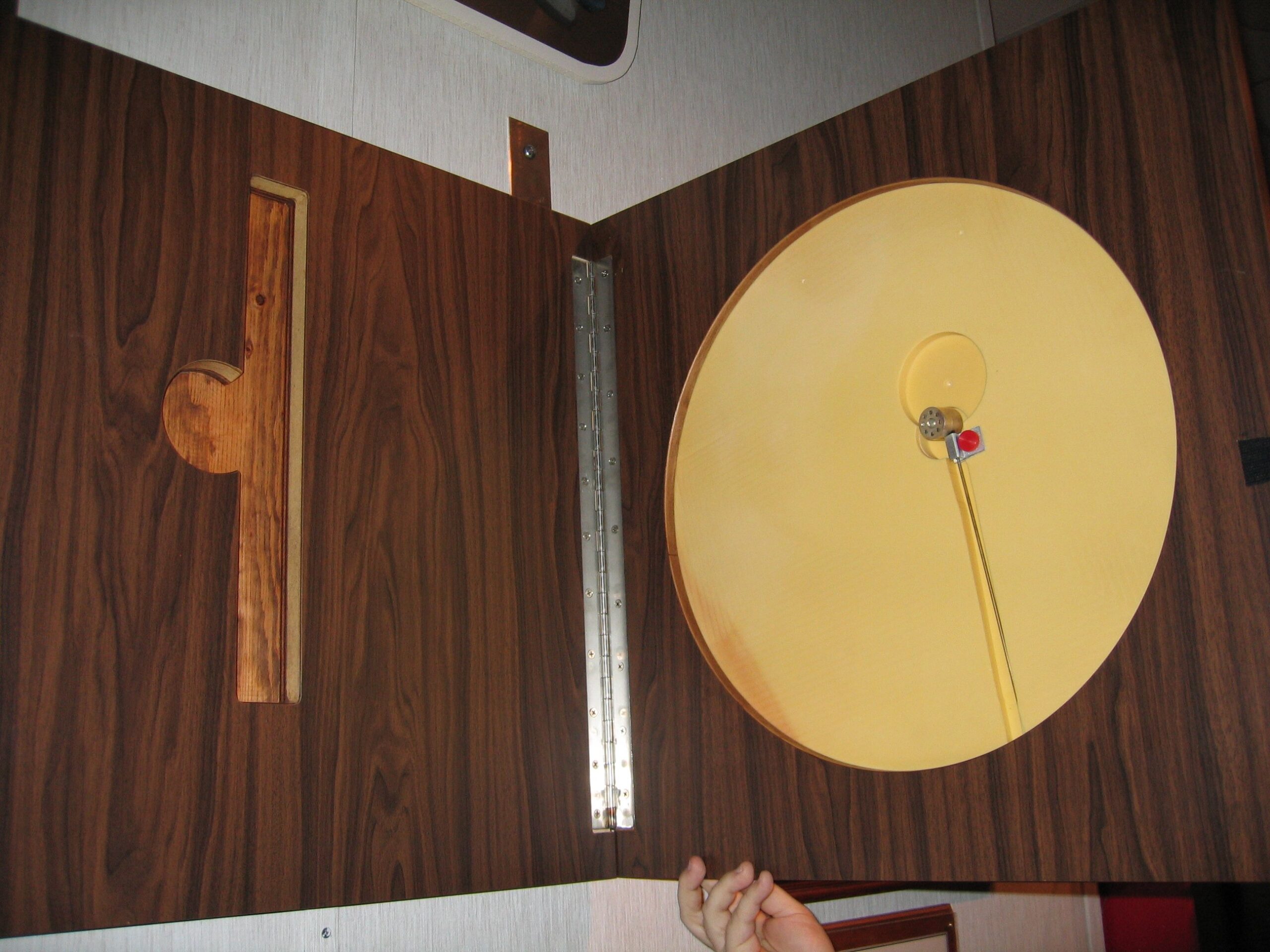
The Thing, one of the first covert listening devices. It was concealed inside a gift given by the Soviet Union to the United States Ambassador to the Soviet Union in 1945. Replica, NSA’s National Cryptologic Museum. Photo by Austin Mills, CC BY-SA 2.0
For nearly half a century, the most dangerous object in a diplomat’s office was rarely a weapon. It was an ashtray. Or a lamp. Or the leg of a chair. Cold War intelligence services on both sides of the Iron Curtain mastered a discipline that turned the ordinary furniture of daily life into a vast, silent network of listening devices, and the story of how they did it remains one of the most interesting chapters in the history of espionage tradecraft.
The Architecture of a Bug
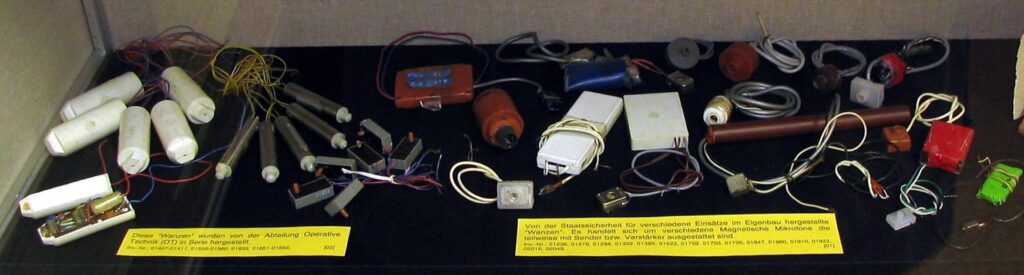
Cold War intelligence services concealed microphones and transmitters in a striking variety of shells, disguising the essential machinery of surveillance inside objects no one would think twice about. A functioning bug consisted of little more than a microphone and a transmitter, yet the engineering challenge was never the electronics themselves. It was concealment. Agencies hid these listening devices inside everyday items such as ashtrays, lamps, mirrors, and even television sets, banking on the fact that intelligence targets rarely inspect the objects they touch every day.
The most elegant designs solved a second problem: power. Bugs hidden inside ordinary electric items did not even need a separate battery, because they drew electric power the moment the object was plugged in. A lamp on a desk, switched on for reading, was simultaneously switched on for eavesdropping. Other devices relied on self-contained batteries, trading the unlimited power of the wall socket for the flexibility of placement anywhere in a room, chair legs and mirror frames included.
From Whisper to Wire: How the Signal Traveled
A microphone alone is useless without a way to move the sound out of the room. This is where the second half of the operation, the transmission network, came into play. These listening devices were able to pick up conversations in a room and transmit them to a nearby receiving station set up by the intelligence service running the operation. Officers stationed in a vehicle outside, in a neighboring apartment, or in an embassy annex would monitor the signal in real time, converting an unguarded dinner conversation into raw intelligence within minutes.
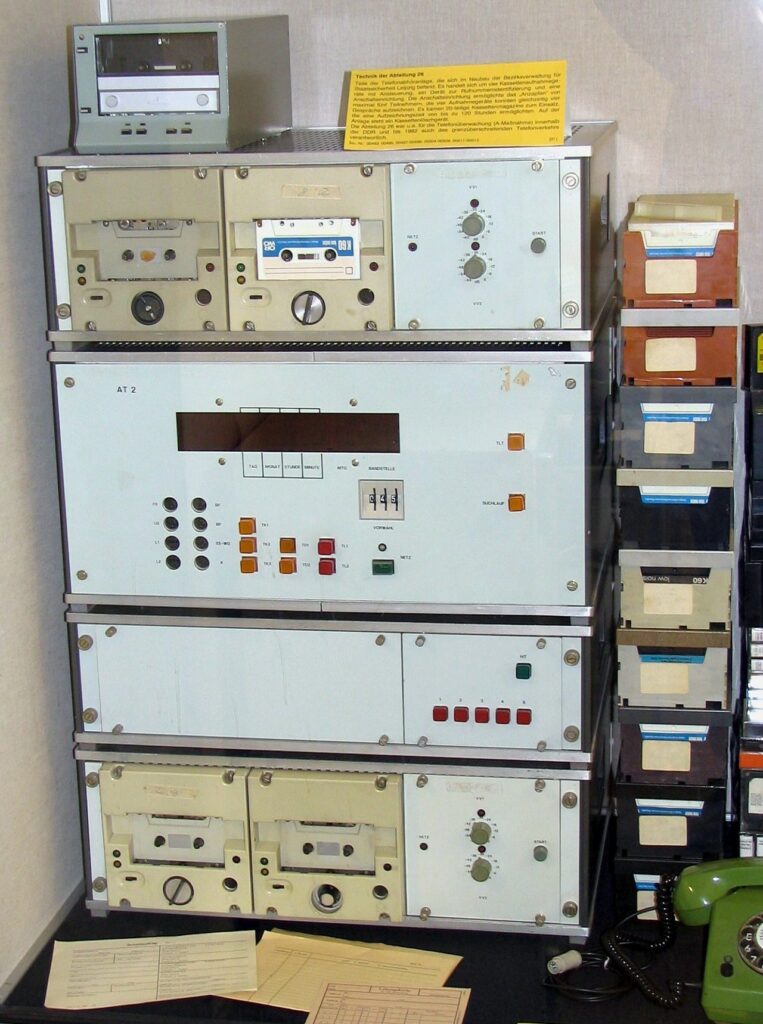
This model made the listening device a genuinely mobile weapon of statecraft. It did not require an agent to remain in the room, only an agent or a diplomatic officer, to place the object once. The risk was transferred from the moment of collection to the moment of installation, which is precisely why disguise became the second pillar of Cold War surveillance craft.
Disguise Was Doctrine
The ability to hide in clear sight was essential for agents operating in hostile territory. Field kits reflected this priority directly. A concealed disguise kit consisted of aids for an agent to modify his appearance, like fake moustaches for officers who lacked one, wigs, and similar items. The agents also could change their height by tucking rubber platforms into their shoes. That way, they could trick the enemy who knew them by their physical characteristics.
A Legacy Beyond the Cold War
Modern counter-surveillance, from diplomatic security sweeps to corporate espionage audits, still traces its methodology back to this era. Every sweep for hidden listening devices conducted today in a sensitive negotiation room is a direct descendant of a discipline perfected between the 1950s and the fall of the Berlin Wall, a reminder that in intelligence work, the most effective weapon has always been the object no one bothers to search.

#/media/File:Bugged-great-seal-open.jpg)

