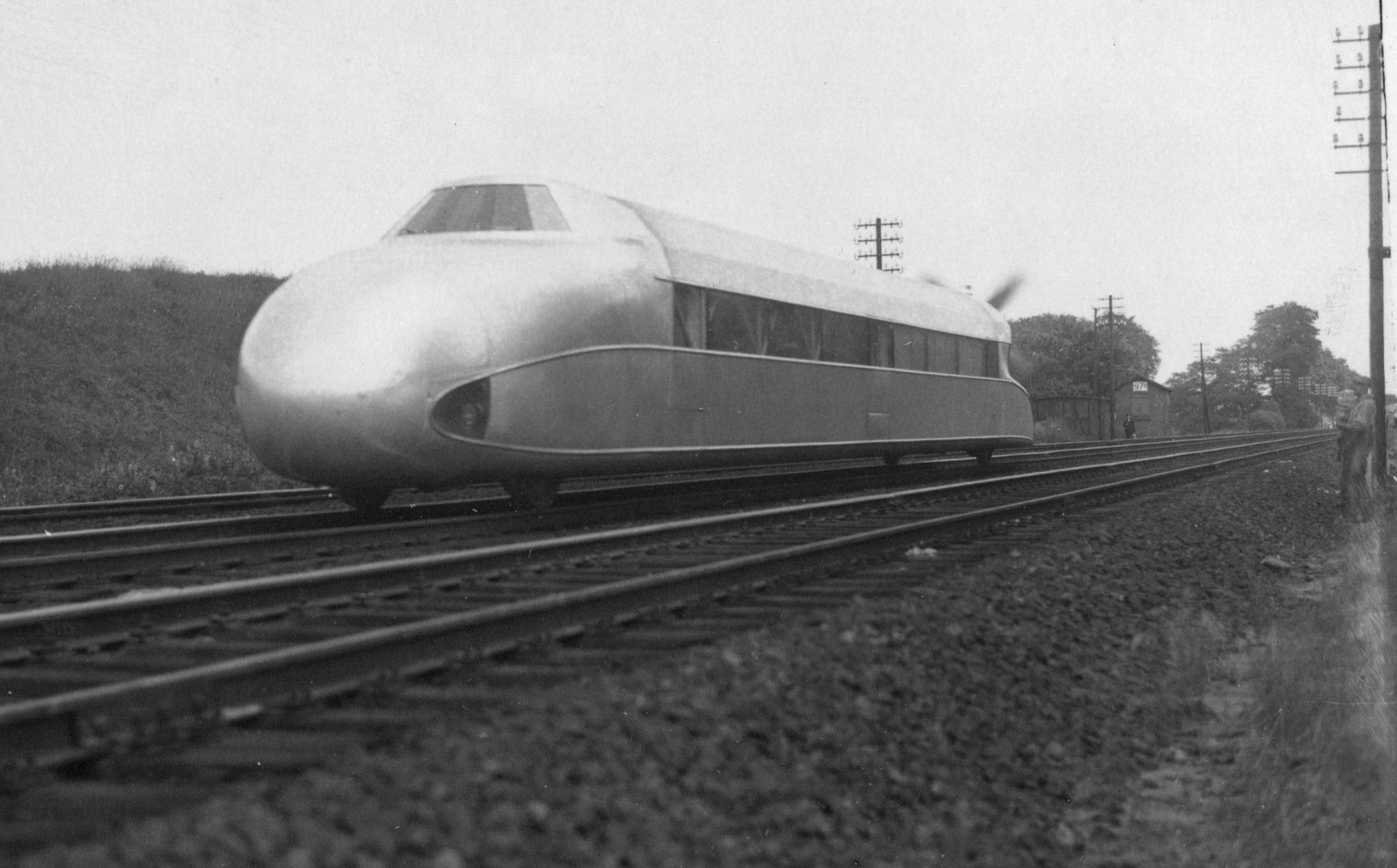
Schienenzeppelin at Erkrath-Hochdahl steep ramp. Photo by Franz Jansen (†), CC BY-SA 3.0
Schienenzeppelin was an experimental railcar that resembled a famous airship. With a huge propeller on the rear and built under the influence of Streamline Moderne, it was an example of a vehicle that promised modernity, progress, and new design. Aerodynamic looks and long, elegant lines perfectly reflected the era in which it was built.
Forms and Colors of the Streamline Moderne
Curving forms, long horizontal lines, and pastel colors were the strongest characteristics of Streamline Moderne, an international style of Art Deco architecture and design. Schienenzeppelin had all of that. Streamline Moderne advocated the new and improved forms of modern transportation, emphasized through simplicity, motion, and velocity. The new vehicles needed to send a message about progress and speed.
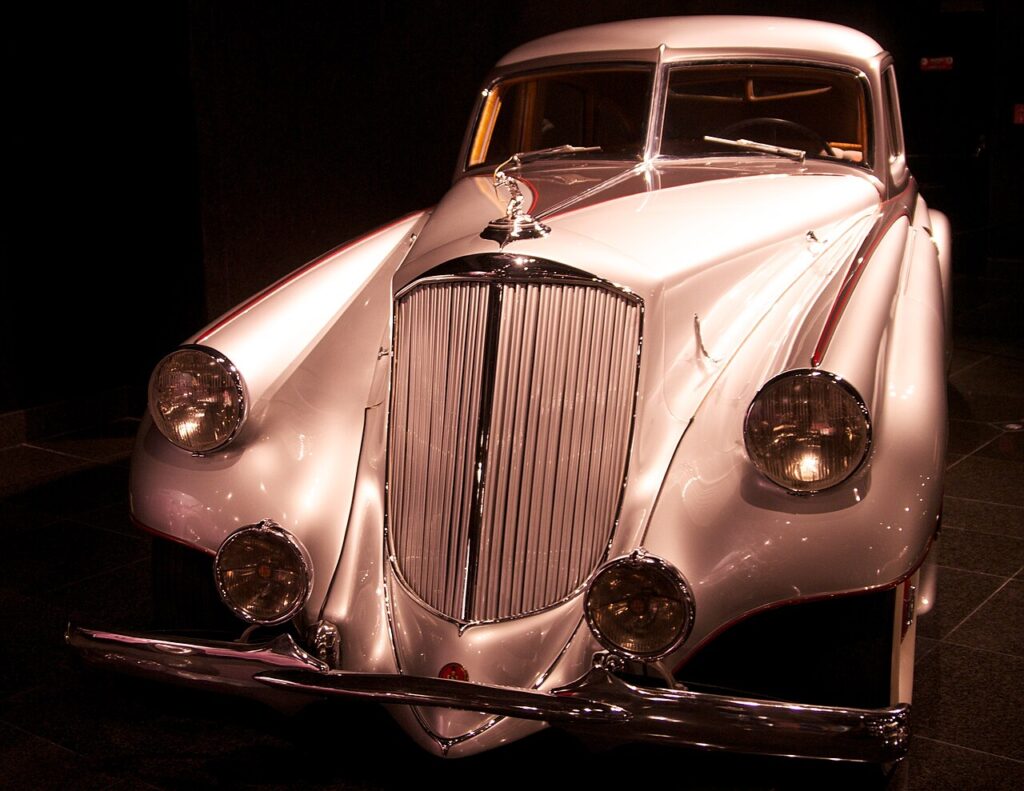
A crucial event for Streamline Moderne vehicles can be traced to the Chicago World’s Fair of 1933–34 when the new cars introduced the new style resembling to ocean liners and airships. Materials like bakelite plastic, stainless steel or enamel perfectly emphasized smooth curves and sleekness. Streamline Moderne appeared as a consequence of economic and social realities of the 1930s, stripping the Art Deco of luxury and introducing a new trend in design that emphasized simplicity and progress. But long lines and sleekness brought another version of luxury. Sometimes at the cost of safety.
Schienenzeppelin Resembled a Zeppelin Airship
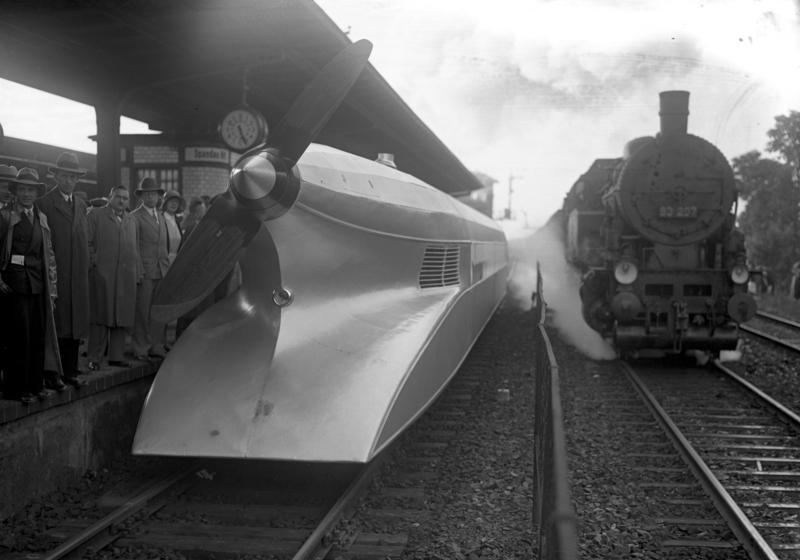
Schienenzeppelin or rail zeppelin was an experimental railship that resembled to Zeppelin airship. Designed by German aircraft engineer Franz Kruckenberg in 1929, this vehicle was also concerning because of safety issues. The railcar was powered by the propeller on its rear, embodying the perfect aesthetics of the Streamline Moderne, minimalistic, emphasizing speed and progress and with that hidden luxury aimed to be in the background, but which dominated the vehicle. The Schienenzeppelin was 84 feet 9 ¾ inches long and had two axles. The wheelbase was 64 feet and 3 ⅝ inches. Its height was 9 feet and 2 ¼ inches. There were also two conjoined BMW IV 6-cylinder petroleum aircraft engines. The streamlined body was built of aluminum. Its spartan interior designed in Bauhaus style fit into the vision of modernity and progress.
Aesthetics vs. Safety
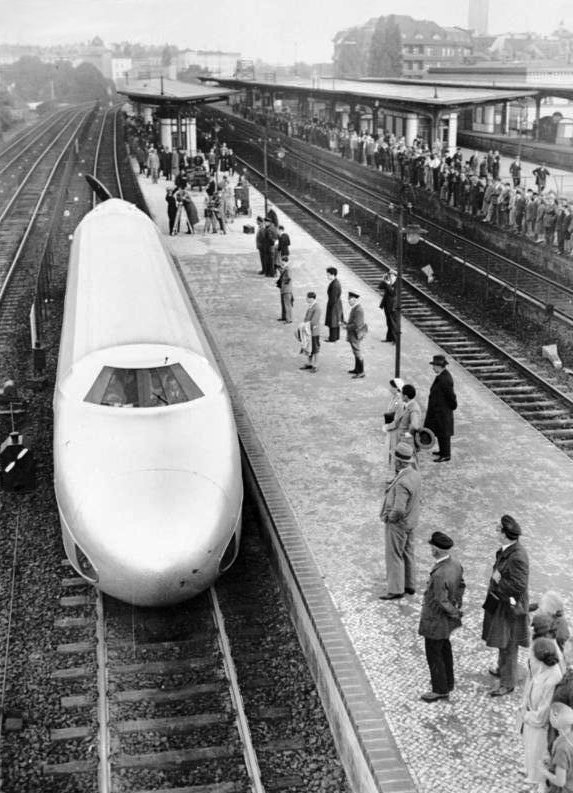
Although its design was modern and it reached the speed of more than 200 km/h for the first time in 1931 and 230.2 km/h in the same year on the line Berlin-Hamburg, which no other vehicle achieved until 1954, Schienenzeppelin brought some serious safety concerns. The main danger was an open propeller in crowded railway stations. Because of its construction, the vehicle couldn’t pull the additional wagons and form a train. There were also difficulties in climbing the steep gradients. Also, operating a propeller close to passengers added a new layer of risk.
A Vision that Vanished with WWII
Schienenzeppelin was an interesting attempt to create a new and fast vehicle that would bring future into transport, but the idea wasn’t possible. There were too many issues that that arose, making it unsurprising that the vehicle was scrapped in 1939. The materials found a new purpose within the German army. Although the attempt of building the new and modern vehicle failed, the Schienenzeppelin was an interesting example of the Streamline Moderne aesthetics that soon vanished with the arrival of WWII. Schienenzeppelin was more of a vision than a useful product, and a reminder of an era that leaned toward the future and progress, attractive because of its specific aesthetics and ideals.


