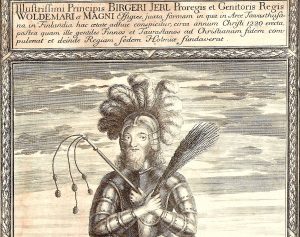
Birger Jarl, Treaty of Lödöse, and the Swedish Crusade in Finland, 1249
The twelfth-century Gesta Danorum (Deeds of the Danes) by Zealand scribe Saxo Grammaticus chronicles ancient hostilities between Vikings and Finnish tribes living between the Arctic and Baltic seas. However, the earliest relatively verifiable account of the Second Swedish Crusade against the Tavastians – a people who lived beyond the southwest Finns proper (Egentliga Finnar) region of Turku – appears in the anonymous fourteenth-century Erik Chronicle (Erikskrönikan).
Read More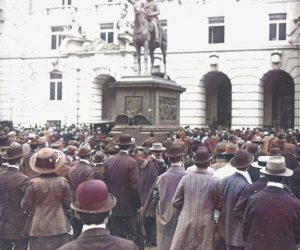
Silent Anticipation and Idolized Soldiers: Life in Vienna in August 1914
People were filled with motivation, bravery, and strength. Like the upcoming war was one of the numerous battles the Habsburg Empire led before. A visitor or someone passing through the city like Kreisler could also encounter romantic scenes like the one with the reservists and his sweetheart.
Read More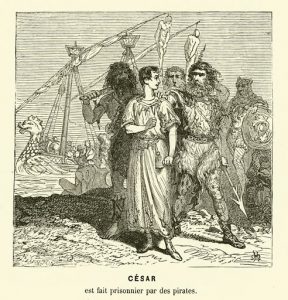
A “Simple Boy” That Wasn’t Naive: Julius Caesar’s Adventure with Pirates
Although Rome protected the Tyrrhenian and Adriatic seas, it was a mainland power and it was a challenge to go against the rising power of pirates, even for powerful Roman leaders just like Julius Caesar.
Read More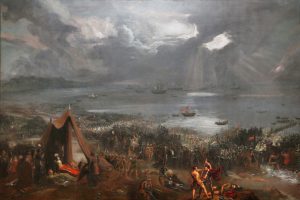
Dublin’s King Sigtrygg Silkbeard and the Battle with Brian Boru at Clontarf, 1014
The legendary Battle of Clontarf at Dublin (Ath Cliath) in 1014 – instigated in part by the king of that realm, Sigtrygg Silkbeard Olafsson (c. 970-1042) – is known for fracturing Viking rule in Ireland but a litany of noblemen and kings on both sides were slain there – including Ireland’s elder high king Brian Boru.
Read More
The Cursed Ring of Sigmundr Brestisson, Viking Chief of the Faroes, 961-1005
According to the unknown author of the Færeyinga saga (Faroese saga) written in Iceland sometime in the early thirteenth century, Sigmundr Brestisson, the first Christian of the Faroe Islands, was an honorable and good man. At a young age he and his cousin Thorer (Þórir) were sold into slavery by a chieftain named Thrand (Þrándr), who successfully plotted to have Sigmundr’s father killed in battle. Later as freemen, Sigmundr and Thorer fought bravely under Earl Hakon (Haakon Jarl) when he ruled Norway for two decades beginning around 975. One day together, Sigmundr asked Hakon for advice on how to avenge his father’s death. Hakon replied that he should put his trust in the old ways, as he did, and led him into a forest where there was a beautiful house with “a lot of idols inside, and many glass windows… A woman was in the innermost part of the entrance, and she was richly adorned.” When the two men entered the house…
Read More