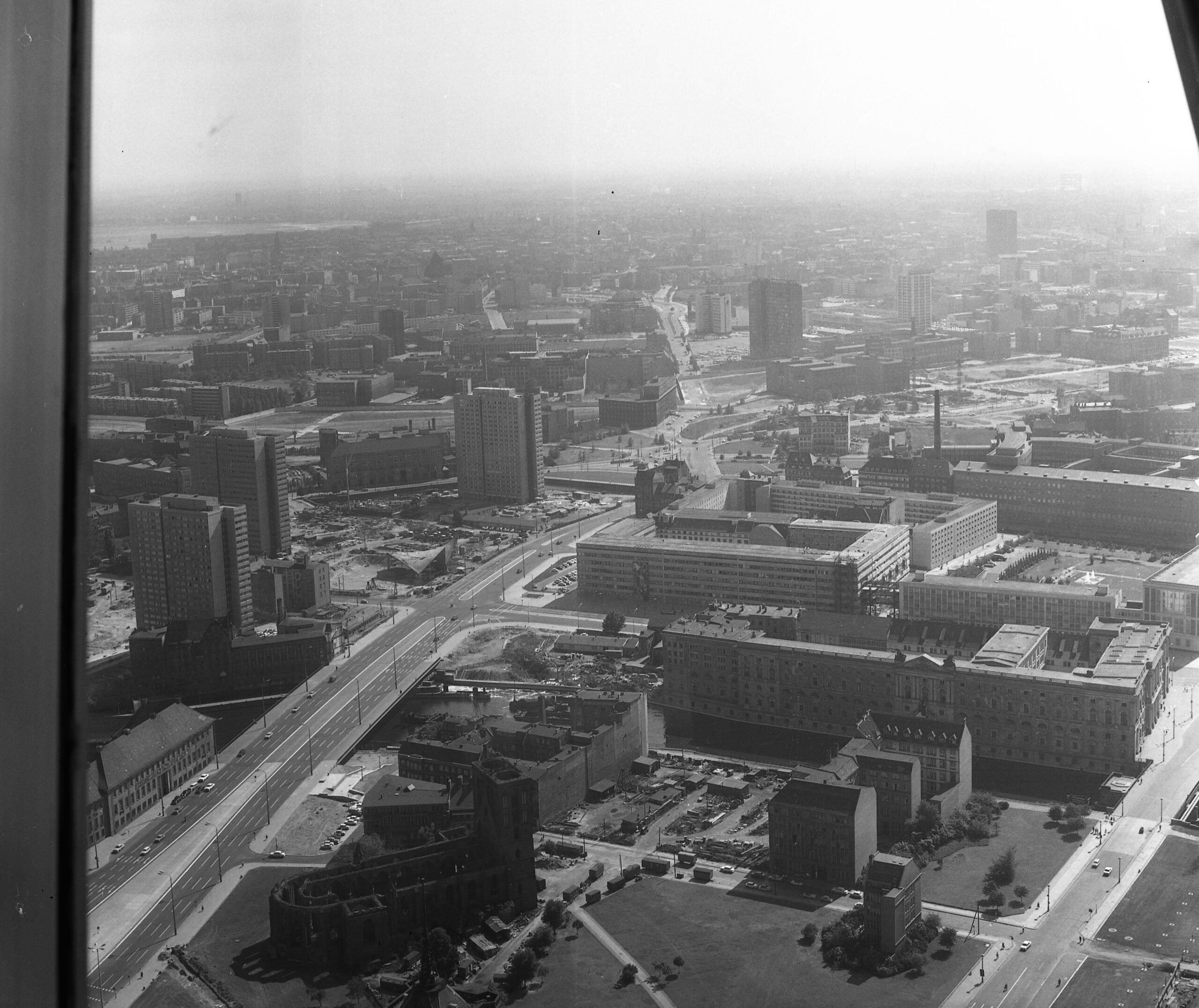
East Berlin, 1970. Fortepan / Nagy Gyula
By the early 1970s, the Eastern Bloc had a housing problem it could not talk its way out of. Postwar migration to cities across Poland, Czechoslovakia, Hungary, and the Soviet Union itself had outpaced construction for two decades, and planners in Moscow, Warsaw, and East Berlin faced the same arithmetic: too many workers, too few apartments, and a political system that had promised both full employment and a home for every family. The response was one of the largest urban-construction efforts in modern European history, and its architectural, social, and administrative scars are still visible today.
The Panel Block Becomes the Face of the Eastern Bloc
The defining artifact of this era is the prefabricated panel apartment block, known variously as panelák, Plattenbau, or khrushchyovka‘s heavier successor. Standardized concrete panels, cast in factories and assembled on-site, let planners across the Eastern Bloc erect entire districts in months rather than years. Nowa Sarzyna, Halle-Neustadt, and Moscow’s outer ring all followed the same logic: centralize production of building components, minimize architectural variation, and maximize unit count per hectare.
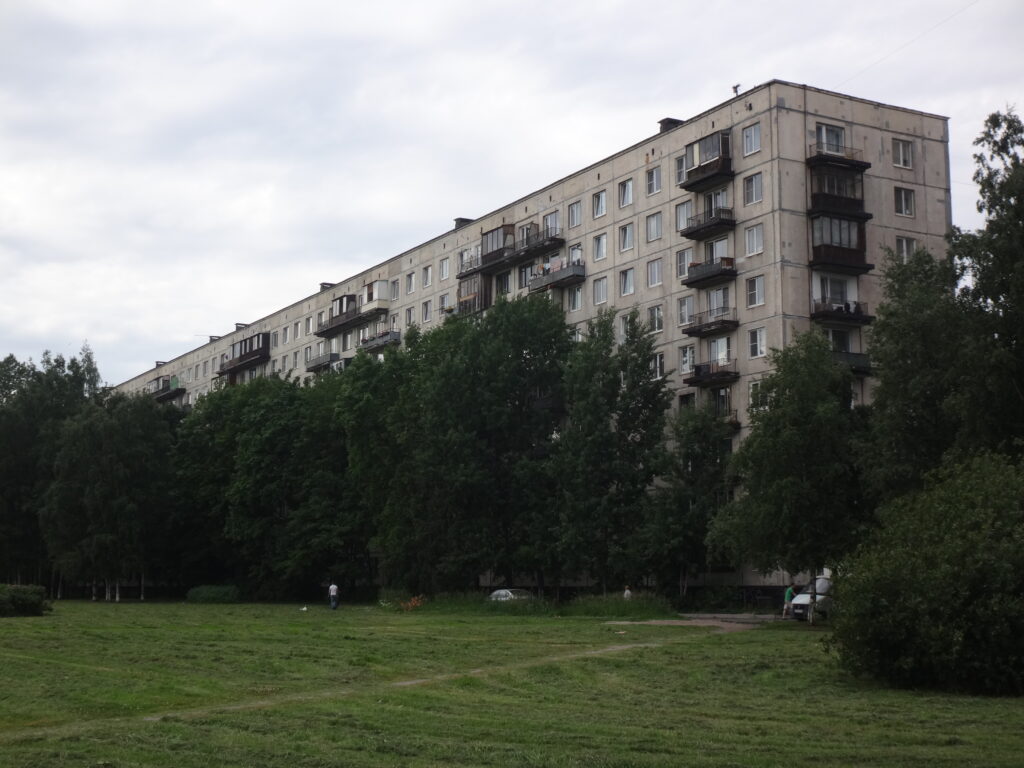
The numbers were genuinely staggering. East Germany alone built roughly two million prefabricated units between the 1960s and the fall of the Wall, with the pace accelerating sharply after 1971 under Erich Honecker’s housing program, which set a target of solving the housing question by 1990. The Soviet Union’s own construction ministry reported annual completions in the millions of square meters through the decade, a scale that dwarfed comparable Western European output relative to population.
Central Planning Meets the Limits of the Eastern Bloc Model
What made this housing drive distinct from Western suburban expansion was its administrative architecture. Land, labor, materials, and even the design templates themselves were state property, allocated through five-year plans rather than markets. This gave Eastern Bloc governments extraordinary short-term capacity to mobilize resources toward a single goal. It also produced predictable distortions: chronic shortages of finishing materials, apartments handed over without functioning plumbing or heating, and waiting lists that, in some cities, stretched for a decade or more even as new blocks rose on the horizon.
Party officials treated completed unit counts as a legitimacy metric, reported upward through the same channels that tracked steel output and grain harvests. This incentive structure rewarded speed and volume over durability. This was a trade-off that later required expensive retrofitting across the region, much of it still unfinished by the time of the 1989-91 transitions.
Everyday Life Inside the Eastern Bloc’s New Cities
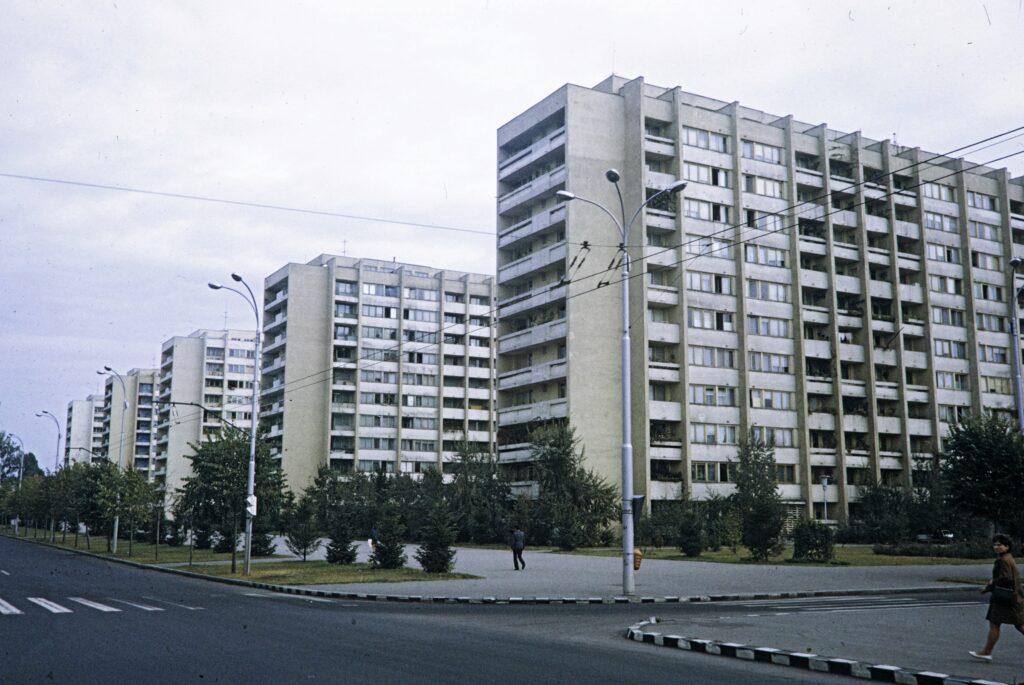
For millions of families, a panel-block apartment represented a genuine improvement over communal housing, shared kitchens, or rural cottages without indoor plumbing. Micro-districts, or mikrorayons, were designed with schools, clinics, and shops built into the master plan, a genuine attempt at self-contained urban living rather than pure dormitory sprawl. Kindergartens, cultural centers, and workplace-linked apartment allocation tied residents’ housing directly to their factory or ministry employer, reinforcing the state’s role as both landlord and employer.
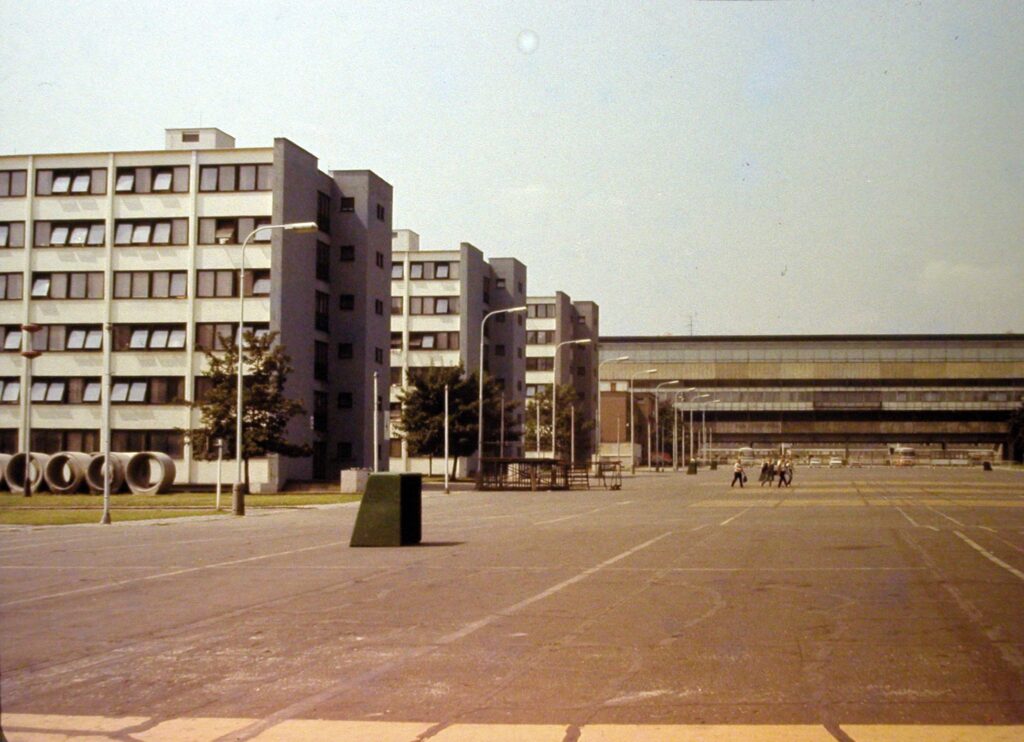
This dual dependency mattered enormously for intelligence services and Western observers tracking social stability across the region. Housing allocation functioned as a quiet instrument of social control: apartments could be granted, delayed, or withdrawn in ways that shaped compliance far more effectively than overt coercion. The resources from the period, since declassified, frequently cite housing waiting lists as a barometer of local Party performance and public patience.
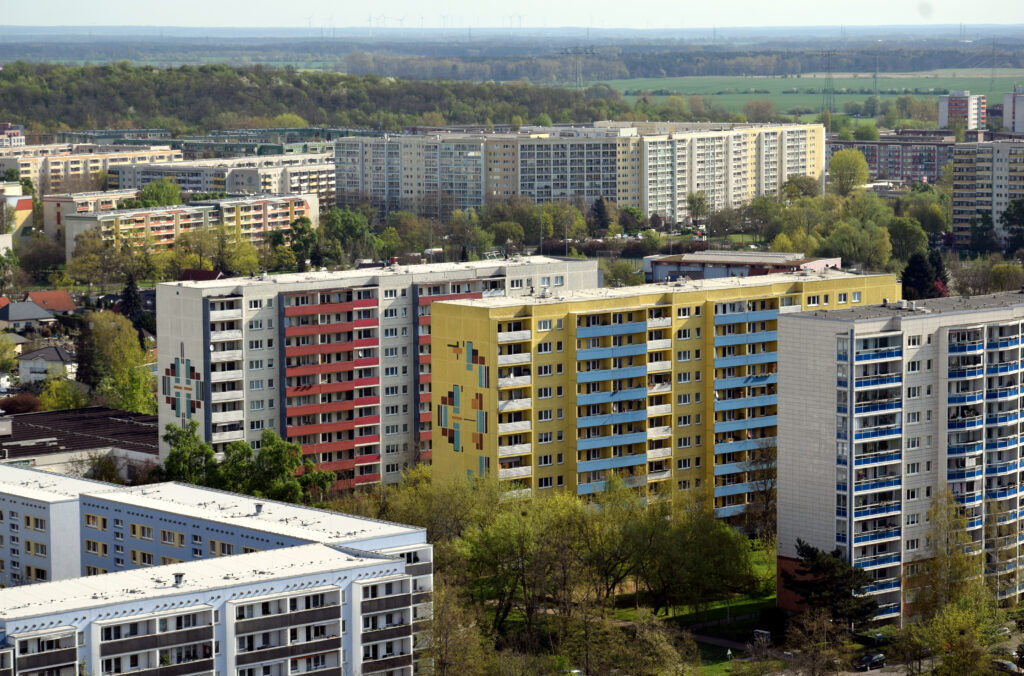
Eastern Bloc’s Housing Legacy
The panel blocks did not disappear with communism. Today they house a substantial share of the urban population across Poland, Romania, the Baltic states, and the former East Germany, retrofitted with insulation, elevators, and private ownership structures that would have been unthinkable in 1975. The 1970s housing drive offers a case study in what centralized planning could achieve at scale, and what it consistently failed to deliver in quality, choice, and long-term maintenance.
Understanding this era is essential context for anyone assessing how the Eastern Bloc governed its populations day to day. The blocks were never just concrete and steel, but policy instruments, and their legacy still shapes urban Eastern Europe nearly four decades after the system that built them collapsed.

