
Spy Artist Against the System: George Tomaziu’s Life in Communist Romania
George (Gheorghe) Tomaziu was a Romanian painter, illustrator, memoirist and poet. He graduated from the Academy of Fine Arts in Bucharest. During World War II, he operated as an MI6 agent. As an agent of the British Intelligence Service, he organized a secret group of collaborators that included Alexandru Balaci, Romanian italianist, literary critic and historian. During 1944, Tomaziu was arrested, beaten and placed under investigation under suspicion of espionage. The same year he was released from Malmaison prison in Bucharest.
Read More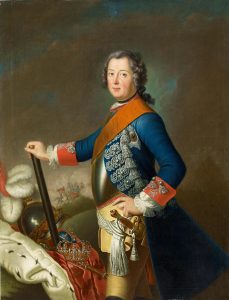
‘Anti-Machiavel’: 18th Century Government – Absolute Power in the Citizens’ Service
“Anti-Machiavel” is an 18th century political essay, one of the most famous works of enlightened absolutism.
Read More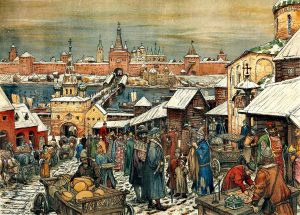
“Beyond the Volok”: The Medieval Frontier and Chronicle of Novgorod, 1016-1471 (Part Two)
Established as a republic in 1136, much of the history of Novgorod was written in the Old Russian Chronicle of Novgorod.
Read More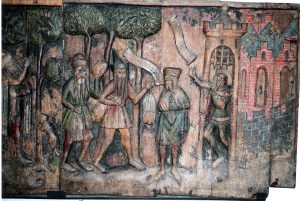
“Beyond the Volok”: The Medieval Frontier and Chronicle of Novgorod, 1016-1471 (Part One)
In the centuries prior to Tsarist Russia’s rise to power the two principal centers connecting the Viking and Byzantine worlds were Novgorod and Kiev. Generally referred to as the Kievan Rus’ – the ascendancy of Novgorod within this loosely connected riverine federation stretching between the Dnieper River and Lake Ladoga’s tributaries to the Baltic Sea began during the reign of Yaroslav the Wise (c. 978-1054) – who became Grand Prince of Kiev in 1019 after ruling Novgorod and forming alliances with Scandinavian Vikings (Varangians).
Read More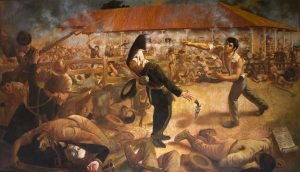
The Obits of William Walker, Filibustering President of Nicaragua
Born in 1824, Walker, who graduated summa cum laud at the age of fourteen from the University of Nashville, tried his hand at respectable professions such as medicine and law, but ended up as the embodiment of a mercenary movement to extend the realm of American empire south of the Mexican border.
Read More