
Cold War Propaganda: Three Ingredients For A Winning Strategy
During the Cold War years, the radio as a propaganda tool had a very important role. Popular in the bigger or smaller communities, it was an optimal medium for the Soviet government to send a political message. But, the political propaganda plan wasn’t only limited to the Soviet Union. It included the whole Iron Curtain.
Read More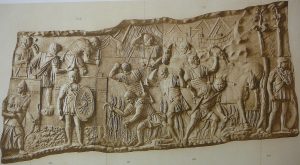
Wheat Collectors Undercover: Lifestyle of Ancient Roman Spies
Frumentarii were a sort of commissariat of Ancient Rome, secret agents and detectives.
Read More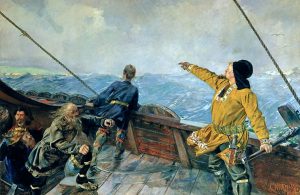
The Thousand-Year Saga of the Northwest Passage
For hundreds of years European explorers braved the Arctic Sea’s treacherous waters in search of an elusive “Northwest Passage” – a route to Asia and Cathay circumventing the Indian Ocean and treacherous horn of South America. The Vikings of Iceland and Greenland were the first to ply the frigid American waters beginning in the late 10th century but colonized and exploited regional resources rather than look for a route to the Far East.
Read More
The Dreaded “Land of Storms”: Rounding, Avoiding, and Cutting Out Cape Horn, 1526-1914
Before the completion of the U.S. transcontinental railroad (1869) and Panama Canal (1914) a major impediment to Euro-American exploration and colonization of Pacific lands was sailing around Cape Horn – the furthest-most point on the South American continent. The Spanish were the first to explore the region in 1526. In the late eighteenth century British and New England whalers began documenting extreme conditions while navigating the Drake Passage – the strait separating Antarctica from South America.
Read More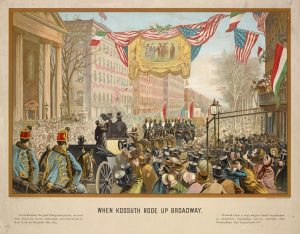
Antebellum Icon: Republicanism vs. Monarchy and Kossuth in America, 1851-1852
Although he was thronged by thousands of people in the principal cities of England, a key reason Hungarian nationalist and freedom fighter Lajos (Louis) Kossuth was so popular during his 1851-1852 visit to the United States was the American aversion to monarchy. Kossuth, the figurehead of the 1848 Hungarian Revolution to overthrow the Habsburg Dynasty’s grip on that nation, was welcomed by massive crowds eager to listen to his republican-inspired orations. The New York Times noted in late 1851 that the “reception of the illustrious Kossuth… was such a scene as the world seldom beholds.”
Read More